What We Can Learn From the Monks: Chronic Pain Recovery and the Stress-Resilient Brain

You may have heard that chronic pain changes the brain. That can sound alarming at first, but understanding how and why it happens is actually one of the most empowering things you can learn on your recovery journey — because it also tells us something profound about how the brain can change in the other direction.
Researchers have found that people living with chronic pain show measurable reductions in gray matter in key brain regions, including the prefrontal cortex, the hippocampus, and the anterior cingulate cortex. These are the areas responsible for emotional regulation, memory, threat assessment, and the ability to calm the nervous system after activation. In other words, chronic pain gradually erodes the very circuitry you need to feel safe and to heal.
This happens because chronic pain keeps the brain's threat-detection system in a near-constant state of activation. The brain is running an alarm that won't shut off, and over time, the sustained state of high alert wears down the regions designed to regulate it. The brain is adapting to a chronic stressor, but not in a way that supports recovery.
This is why starting on a mind-body approach can feel so hard at first.
What we can learn from the monks
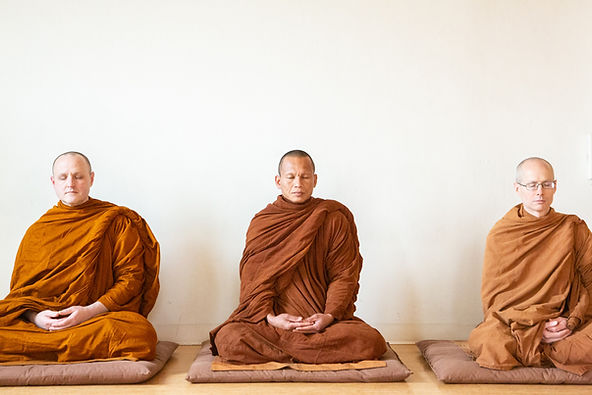
Researchers studying long-term meditators, including Tibetan Buddhist monks with tens of thousands of hours of practice, found something incredible. These individuals show increased gray matter density in many of the same regions that chronic pain erodes — a thicker prefrontal cortex, more robust hippocampal volume, and a more developed insula, which is the region of the brain responsible for reading and interpreting the body's internal signals.
What's remarkable is that the regions most affected by chronic pain and those most developed in long-term meditators are largely the same. The chronic pain brain and the stress-resilient brain are essentially mirror images of each other.
Chronic pain degrades these regions by flooding the system with persistent danger signals. Meditation builds them by repeatedly, consistently offering the opposite: safety, presence, and calm connection.
This tells us something important about how recovery actually works. It isn't just about managing symptoms day to day. When we engage in practices that down-regulate the threat response and cultivate a felt sense of safety in the body, we are participating in a process that can physically reshape the brain over time to help symptoms fade.
And you don't need to move to Tibet and become a monk to benefit from this. Research shows meaningful neuroplastic changes from consistent, moderate practice sustained over time. The brain is not fixed. It is a living, adaptive organ that responds continuously to our experiences throughout our lifetime.
Chronic pain is a pattern the brain has learned — often for very understandable reasons, adverse childhood experiences, prolonged stress, or emotional overwhelm. But these learned patterns can absolutely change. I've been lucky enough to witness this unlearning process in myself and my clients.
This is also what approaches like Pain Reprocessing Therapy, Emotional Awareness & Expression Therapy, and nervous system regulation were created for. They are not simply coping tools. They are sending the brain new information, day after day, that it is safe — and the brain, given enough of those signals, responds and physically changes. How cool is that?
Chronic pain is a brain pattern, not permanent damage.
And brain patterns, given the right conditions, change. The monks didn't start with exceptional brains. They built them. So can you.
If you're curious about how mind-body approaches can support your recovery, contact me to schedule a coaching session.
Sources:
Apkarian AV, et al. Chronic back pain is associated with decreased prefrontal and thalamic gray matter density. J Neurosci. 2004;24(46):10410-5.
Hölzel BK, et al. Mindfulness practice leads to increases in regional brain gray matter density. Psychiatry Res. 2011;191(1):36-43.


Comments